WARSAW MUMMY PROJECT

5000 years ago, the first mummies appeared on the Nile – a legacy of the culture
of ancient Egypt. What stories do these bandaged bodies conceal?
Discover the world of mummies by means of 21st century technology…


ABOUT THE PROJECT

Warsaw Mummy Project was initiated by a group of archaeologists bio-archaeologists from the University of Warsaw in 2015. The project aims to thoroughly examine human and animal mummies from ancient Egypt at the National Museum in Warsaw.

READ MORE

MUMMIES IN NUMBERS

0
M DOGS

were mummified in Anubion

0
TOMBS

were discovered in the Valley of the Kings

0
BODIES

were removed from the body:
liver, intestines, lungs and stomach

0
IN BC

the ancient Egyptians created first mummies

0
M2 OF FLAX

were used to protected the mummy of Waha from Thebes

ABOUT RESEARCH TECHNIQUES

How do we examine the mummies and uncover the truth? By using a two-step process involving non-invasive tests and laboratory tests, we are able to examine the mummies fully and uncover the truth within.

READ MORE

EXAMINE THE MUMMIES OF CATS

Come and take a look into some of our research and see for yourself what mummies conceal! Glimpses into the interiors of mummies is made possible by means of X-ray examination.

EXAMINE THE MUMMY OF A CHILD

ABOUT THE TEAM

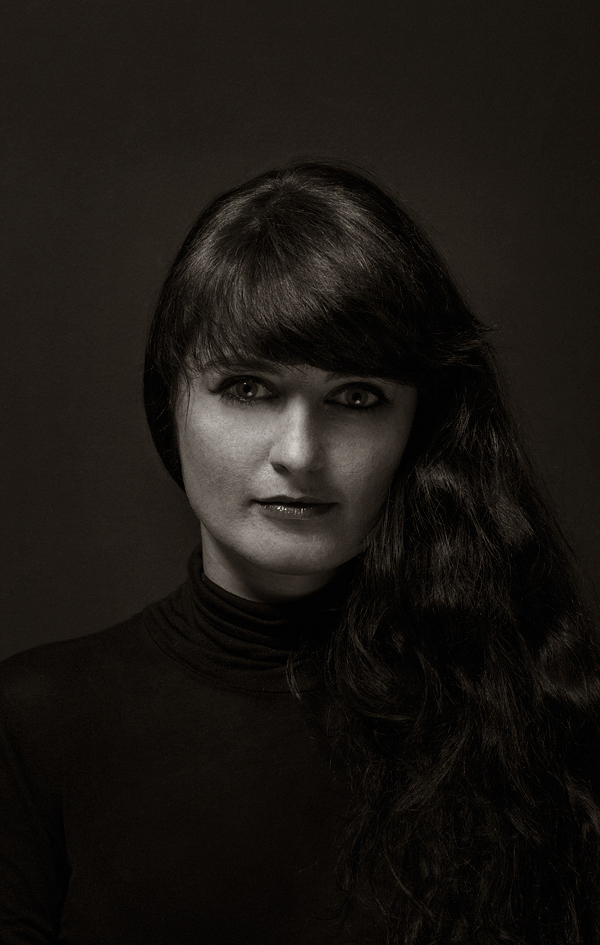
MARZENA OŻAREK-SZILKE

MARZENA
OŻAREK-SZILKE

Archaeologist of Egypt,
bio-archaeologist and paleopathologist

KAMILA BRAULIŃSKA

KAMILA
BRAULIŃSKA

Archaeologist of Egypt,
zoo-Egyptologist

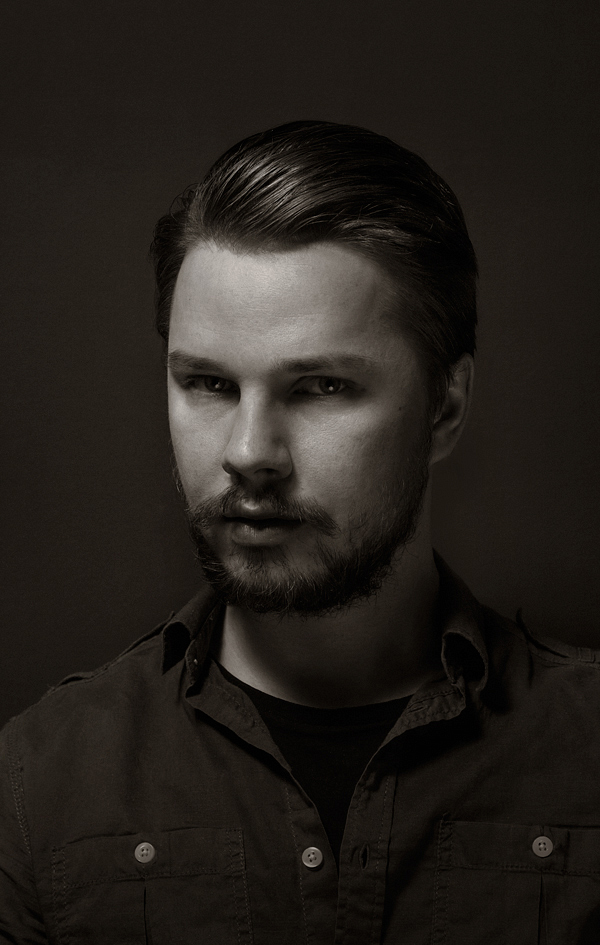
WOJCIECH EJSMOND

WOJCIECH
EJSMOND

Archaeologist of Egypt

EN

ABOUT THE PROJECT

Egyptian mummies are a great source of information when it comes to our understanding of the mysteries of the civilization of Pharaohs. Not only do we get a glimpse of their own lives and history, but they also shed light on what life is like in ancient Egypt, their culture, burial beliefs and much more. With the help of advanced technology, we can even uncover the answers to more specific questions concerning age, cause of death, suffered diseases, standard of living, and even the level of stress!

ABOUT RESEARCH TECHNIQUES

The first stage involves CT scan, X-rays, dactyloscopy (fingerprint examination), podoscopy (footprint examination) as well as macroscopic analysis of mummification methods and the state of tissue preservation.

The second stage is more complicated. It consists of laboratory tests that require the use of invasive techniques necessary to sample small amounts of tissue by the means of laparoscopic methods among others. The tests allow us to find out if there are any visible signs of health conditions. For example, these tests can detect tumors, injuries and fractures as well as metabolic, infectious, vascular and parasitic diseases. The project also includes cooperation with the Italian Carabinieri unit specializing in fingerprint analysis. Such analysis will help us to identify the fingerprint characteristics of the people living in Egypt thousands of years ago. Prints of mummified feet will also be taken in order to determine the dominant survival activity or for example posture defects.

Thanks to the most advanced X-ray techniques it will be also possible to identify objects hidden among the bandages, like amulets, equipment associated with mummies, as well as various custom burial elements.

Wojciech Ejsmond

Archaeologist of Egypt

A graduate of the Institute of Archaeology of the University of Warsaw, where he defended his Master’s thesis titled "The Egyptian Temples in Pre- and Early Dynastic Period" under the guidance of prof. Andrzej Niwiński. He is currently a participant in an interdisciplinary doctoral studies conducted by the Antiquity of South-Eastern Europe Research Centre UW, where he is preparing his doctoral thesis under the guidance of prof. Karol Myśliwiec. His work has been awarded as the winner, among others, of the scholarship “Start” founded by the Foundation for Polish Science. Wojciech has been engaged in research activities for many years.

He is currently the director of Gebelein Archaeological Project (southern Egypt). He also participated in excavations carried out in Syria, Turkmenistan, Montenegro and Italy. He is the author of numerous articles on the subject of Egyptian and Middle Eastern archaeology, a member of the editorial board of "Medżat – Egyptological Studies" and a board member of the International Association for Students of Egyptology. He is also a member of the International Association of Egyptologists, the European Association of Archaeologists as well as several scientific societies at the University of Warsaw. He participated in numerous international conferences, and is invited to present lectures on the results of his research at Gebelain for an international audience.

As a traveler he hitchhiked across most of Middle East and Central Asia. His travels has resulted in photo exhibitions, lectures and popular science articles.

Kamila Braulińska

Archaeologist, archaeological photographer, tourism specialist

Currently writing her doctorate on animals in ancient Egypt at the Faculty of Archaeology, University of Warsaw (under the guidance of Professor Adam Łukaszewicz) and studying Egyptology at the Faculty of Oriental Studies. A graduate of the Institute of Archaeology at the University of Warsaw, where she defended her Master’s thesis on canids in ancient Egypt. She is interested in zoology of Egypt and Africa, zoo-archaeology (skeletal remains of animals discovered during archaeological excavations), animal mummies, zoogeography (the distribution of various species around the world), osteology (the study of bones), the psychology of animals and their behavior, cynology (the study of canids), and physical anthropology. Kamila has lived in Egypt altogether for over 6 years, working at archaeological missions, conducting her research at the famous museums and specialized libraries, visiting other archaeological sites, often difficult to access - the more interesting adventure, the better. Kamila is a multiple recipient of scholarships from the Ministry of Science and Higher Education and the Polish National Agency for Academic Exchange, awarded by the Centre of Mediterranean Archaeology of the University of Warsaw, which she spent entirely in Egypt. She lived there on her own as well, working as a scientist and at the same time trying to improve the lives of animals, to which she has dedicated most of her life. She has adopted five dogs, including two from the Polish shelters. In Egypt she adopted two stray dogs that came with her to Poland. Her other dog came from Cyprus, where she lived for half a year and worked i.a. as a volunteer at an animal shelter.

Kamila has participated in archaeological expeditions and research carried out at Deir el-Bahri (Temple of Queen Hatshepsut), Berenice (city and port, Hellenistic and Roman), Valley of the Kings (tomb of Ramses VI), Tell el-Retaba (New Kingdom fortress and settlement), as well as other places in the world. She was a speaker at over 30 scientific conferences, most of which were international, in Argentina, Croatia, Czech Republic, Egypt, France, Great Britain, Greece, Italy, Peru, Poland, Portugal, South Africa, Spain and Turkey, and additional lectures, presenting the results of her studies on ancient animals. Kamila is an author of several articles on the subject as well. She has also been a participant in many training programs, a member of several associations such as the International Association of Egyptologists and the International Council of Archaeozoology as well as a promoter of archeology, ancient Egypt and animal topics.

Beside her study of animal mummies at the National Museum in Warsaw, currently Kamila conducts the Polish Animal Mummy Project, aiming at the research on all the animal mummies in Poland. This research is currently financed by the National Science Centre, Poland, as a research grant no. 2019/35/N/HS3/04438, entitled Egyptian Animal Mummies in Poland: non-invasive and historical research phase of the Polish Animal Mummy Project.

Marzena Ożarek-Szilke

Archaeologist working mainly in Egypt, bio-archaeologist and paleopathologist, a member of the Polish Anthropological Society

She graduated BA and MA at the Institute of Archaeology at the University of Warsaw (specializing in physical anthropology / bioarchaeology, archaeology of Ancient Egypt, Greco-Roman Egypt and the culture of Hellenistic east). Her thesis titled. "Modern Techniques of Testing on Egyptian Mummies" was written under the guidance of assoc. prof. Andrzej Niwiński from the Institute of Archaeology of the University of Warsaw.

Currently a graduate of the doctoral studies at the Faculty of History, University of Warsaw, Marzena is busy finishing her work on an interdisciplinary doctoral thesis titled "The Living Conditions and State of Health of the Inhabitants of the Oasis of Fayum in XI-XII century, based on human skeletal remains from the cemetery A in Naqlun in Egypt". The thesis is being written under the guidance of assoc. prof. Adam Łukaszewicz from the Institute of Archaeology of the University of Warsaw and assoc. prof. Maria Kaczmarek from the Institute of Anthropology at the Faculty of Biology Adam Mickiewicz University in Poznan.

Her scientific research interests include: archaeology of Egypt, mummification, physical anthropology (also forensic), paleopathology, human anatomy, tafonomy, history of medicine and the methods of human remains examination.

Marzena has been continuously engaged in scientific analysis of mummified, skeletal and cremated human remains since 2006. During that time she worked in cooperation with, among others, the National Museum in Szczecin, Highway Research Centre IAUW and the Centre of Mediterranean Archaeology in Warsaw.

She has conducted anthropological analysis of human bones from dozens of sites in Poland and abroad. Since 2006 she has been a member of the archaeological mission at Naqlun in Fayum Oasis in Egypt, where she is the chief anthropologist (since 2009). She is also the chief anthropologist at Gebelain archaeological mission in Egypt (since 2015), where besides conducting osteological examination, she is the co-author of a new method of anthropological prospecting, which employs GIS techniques.

Marzena completed numerous courses and workshops on physical anthropology, anatomy and paleontology led by British and Polish scientists from various fields as well as courses in medical emergency, working with camera, and crisis management etc. She participated in numerous conferences and scientific workshops. Since 2002 she has been involved in science popularization projects and in 2010 she started her own company “Vesperis”, which conducts bio-archaeological analyzes and develops educational science programs for children and youth.

Currently Marzena is the only anthropologist who is comprehensively studying Egyptian mummies in Poland.